Why I Built an AI Tutor for Cameroonian Students
TiCLearn started with a simple frustration: the students who need quality study support the most are the ones least served by existing tools. Here's the problem, the market case, and what I'm building to fix it.
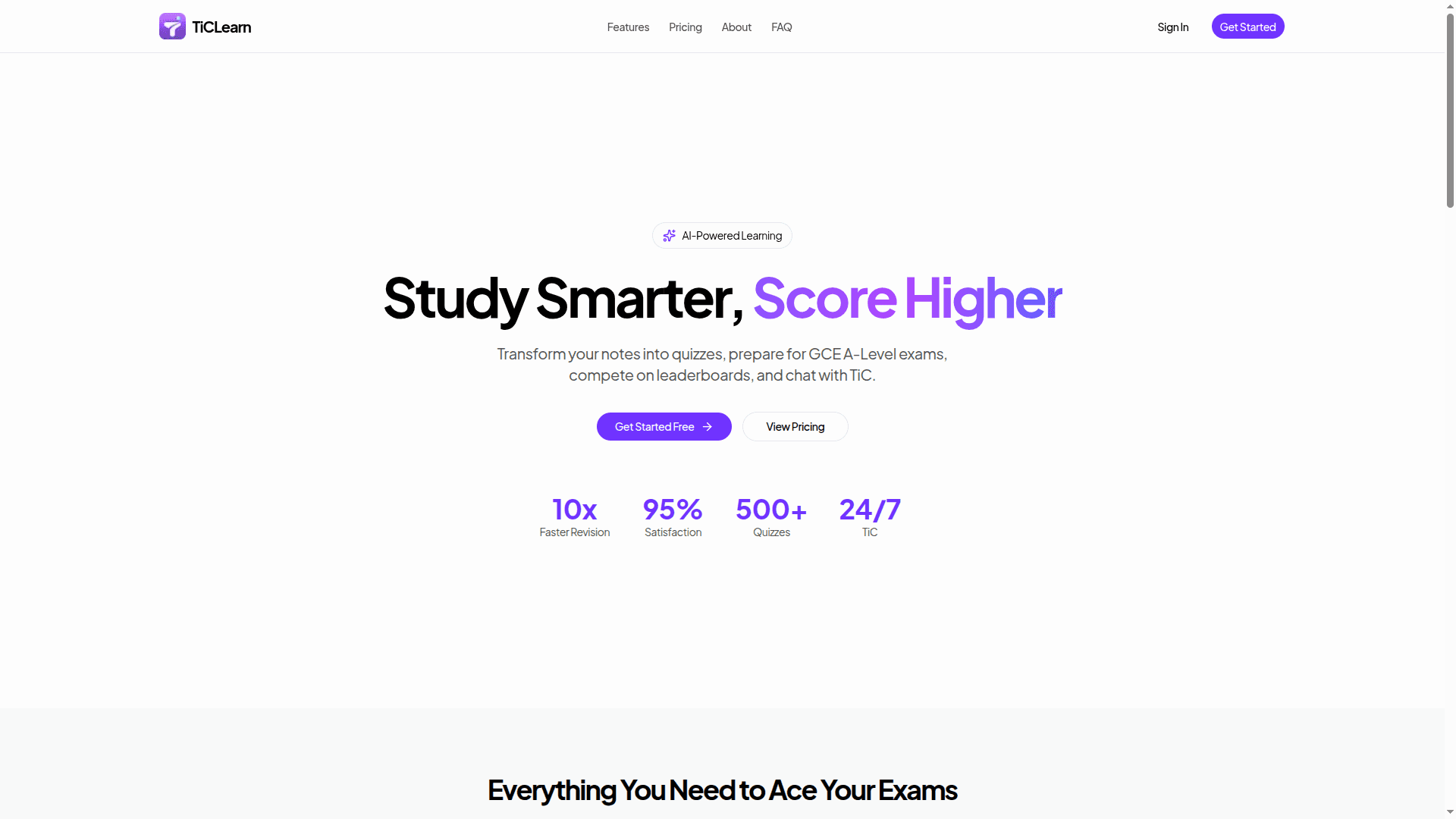
Building TiCLearn: An AI Study Platform for GCE A‑Level Students in Cameroon
Every year, thousands of Cameroonian students sit the GCE A‑Level exams - an exam that shapes university admissions and, in many cases, life trajectories.
The curriculum is demanding. Quality tutors are scarce and expensive. And most tools students can access weren’t built for structured exam preparation.
I’ve watched students study harder than anyone I knew - only to walk into exams underprepared. Not because they didn’t try. But because they lacked the right support at the right time.
That frustration is what led to TiCLearn.
The Ecosystem It Lives In
TiCLearn operates under the broader TiC Summit ecosystem, a Cameroonian initiative focused on empowering secondary and high school students through technology and innovation.
The TiC Summit program has reached over 10,000 students across 50+ schools since 2021, with a mission to empower young innovators through mentorship and hands-on learning (TIC Summit – Empowering Young Innovators, About TIC Summit).
TiCLearn isn’t a random SaaS tool. It sits inside a community already working with secondary school students across Cameroon.
The Market Gap Nobody Is Building For
Sub-Saharan Africa has the fastest-growing youth population in the world. By 2030, roughly one in three young people globally will be African (widely reported by UN population projections).
Yet edtech investment has largely done one of two things:
- Ignored this market.
- Copied Western tools into a completely different context.
And then wondered why adoption stalled.
The structural realities are different:
- Low-bandwidth environments
- Mobile-first (often mobile-only) internet access
- Local payment systems (Mobile Money > credit cards)
- Curricula that diverge from UK/US exam boards
Generic AI tutors assume:
- Broadband.
- Stripe-enabled credit cards.
- SAT, GCSE, or AP syllabuses.
That assumption breaks immediately in Cameroon.
Building for this market isn’t just a social mission.
It’s a product opportunity with almost no real competition.
What TiCLearn Is
TiCLearn is an AI-powered study platform built specifically for GCE A‑Level students in Cameroon.
It’s designed around how students actually study - not how Silicon Valley thinks they study.
Core Features
- Upload Class Notes Students upload their own notes - PDFs, typed material, or structured content.
- AI-Generated Quizzes The system generates quizzes directly from their uploaded material. Not generic questions. Context-aware revision.
- Chat with TiC (AI Tutor) A syllabus-aware AI tutor that responds within the context of the GCE curriculum.
- Progress Tracking & Leaderboards Engagement isn’t accidental. Gamification increases consistency.
- Local Payments Integrated with MTN Mobile Money and Orange Money via Fapshi, because that’s what students actually use.
- Mobile-First UX Designed for low-bandwidth environments and affordable Android devices.
The Tech Stack (Production-Ready, Not a Demo)
TiCLearn runs on:
- Next.js
- TypeScript
- Prisma
- PostgreSQL
The AI layer integrates structured prompt engineering around the GCE syllabus, ensuring responses aren’t generic chatbot answers.
Payments are handled through Fapshi to bridge Mobile Money infrastructure.
The system isn’t a prototype. It’s built to ship and scale.
The Hardest Problem: Activation
The biggest surprise wasn’t AI.
It was activation.
Getting students to sign up is one problem. Getting them to upload notes, generate a quiz, and chat with the tutor is another.
That gap - from account created -> first meaningful action - taught me more about product design than any code ever has.
Fixes we’re iterating on:
- Guided onboarding
- Default demo content for first interaction
- Progressive feature unlocking
- Clear “next action” prompts
Retention isn’t built with features. It’s built with momentum.
Why This Matters
Cameroon doesn’t need another generic AI wrapper.
It needs:
- Tools aligned with its curriculum.
- Pricing aligned with its economy.
- Infrastructure aligned with its connectivity.
- Community aligned with its students.
TiCLearn is built for how students here actually live and learn.
What’s Next
The roadmap includes:
- Offline mode for unstable connectivity
- French-language support
- Institutional dashboards for schools
- Teacher analytics
- Curriculum-mapped structured revision paths
The foundation is already there:
- A real user base.
- Active learner feedback loops.
- Community-driven iteration.
- Infrastructure that matches the market.
The Bigger Lesson
You don’t have to build for Silicon Valley.
You can build for where you are.
And sometimes, the biggest opportunities aren’t in crowded global markets - they’re in overlooked local ones.
If you're building in Africa, especially in underrepresented regions:
Don’t copy. Contextualize.
Build for reality. Ship for your people.
And improve from there.
If you're interested in collaborating, piloting in a school, or contributing to the roadmap - reach out.
Let’s build products that actually work where we live.